Supplier matching workflow
Aluminum Utility Trailer Manufacturers Compared on One RFQ
AlloyTrailer Source converts operating needs into a controlled request for quotation, identifies candidate original manufacturers, and organizes their responses. We remain independent of the factories and do not represent inventory, certification, or authorization.
For an aluminum utility or cargo trailer, the request should state the trailer form, load and route, body or deck dimensions, GVWR target, axle count and GAWR, payload basis, coupling, brake controls, wheels and tires, cargo access, quantity, destination, and requested delivery window.
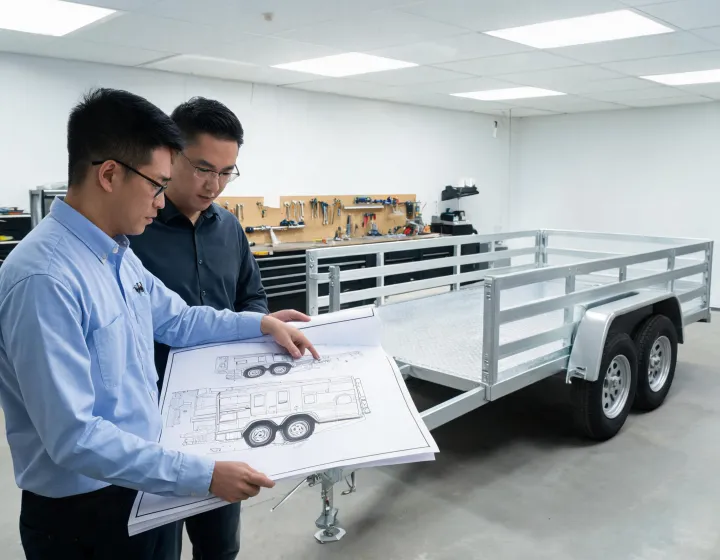
Turn a trailer request into comparable supplier responses
1. Freeze the duty and envelope
Describe the cargo, loading equipment, route, towing vehicle, operating frequency, storage conditions, door openings, and clear interior envelope. If payload is a decision factor, require each supplier to show the relationship among GVWR, axle ratings, estimated tare weight, options, tongue weight, and usable payload. Family maximums are not a substitute for the quoted configuration.
2. Align the manufacturing scope
Issue the same questions for frame and body material, floor construction, fasteners, roof and wall system, corrosion interfaces, running gear, brakes, wiring, lighting, finish, restraints, spare parts, drawings, and inspection points. Aluminum can reduce tare weight, but alloy choice, joint design, repair practice, galvanic isolation, and added equipment affect the final result; the trade-off must be reviewed rather than assumed.
3. Normalize price and delivery
Ask for unit price, customization or tooling, sample or prototype terms, inspection, documentation, packaging, inland transport, international freight, duty assumptions, and destination services as separate lines. Compare on one currency, quantity, Incoterm, destination, and validity period. Final MOQ, availability, lead time, and price depend on the current factory quotation.
Evidence questions before award
Documents must describe the exact trailer model and quoted configuration. Company-level or product-family material does not establish destination acceptance.
Which ratings need a traceable basis?
Request the offered GVWR, each axle rating, tire and wheel ratings, braking configuration, estimated tare weight, payload calculation basis, coupling rating, and any assumptions about load distribution or tongue weight.
How should compliance material be treated?
Ask the supplier for documents associated with the exact model, configuration, and production scope, then have qualified destination-side parties confirm applicability. AlloyTrailer Source does not grant FMVSS, registration, import, or other approval.
What makes an alternative acceptable?
Require a written deviation list. A substitute axle, floor, door, brake controller, tire, alloy, or dimension should be assessed against the duty brief, not accepted because its catalog name appears similar.
Start with a drawing, reference trailer, or cargo-duty brief
Include quantity, US destination, the ratings to verify, inspection needs, document list, and any optional target budget or supplier preference.
Share Requirements