Trailer procurement brief
How to Check Usable Interior Space in an ALCOM Aluminum Cargo Trailer
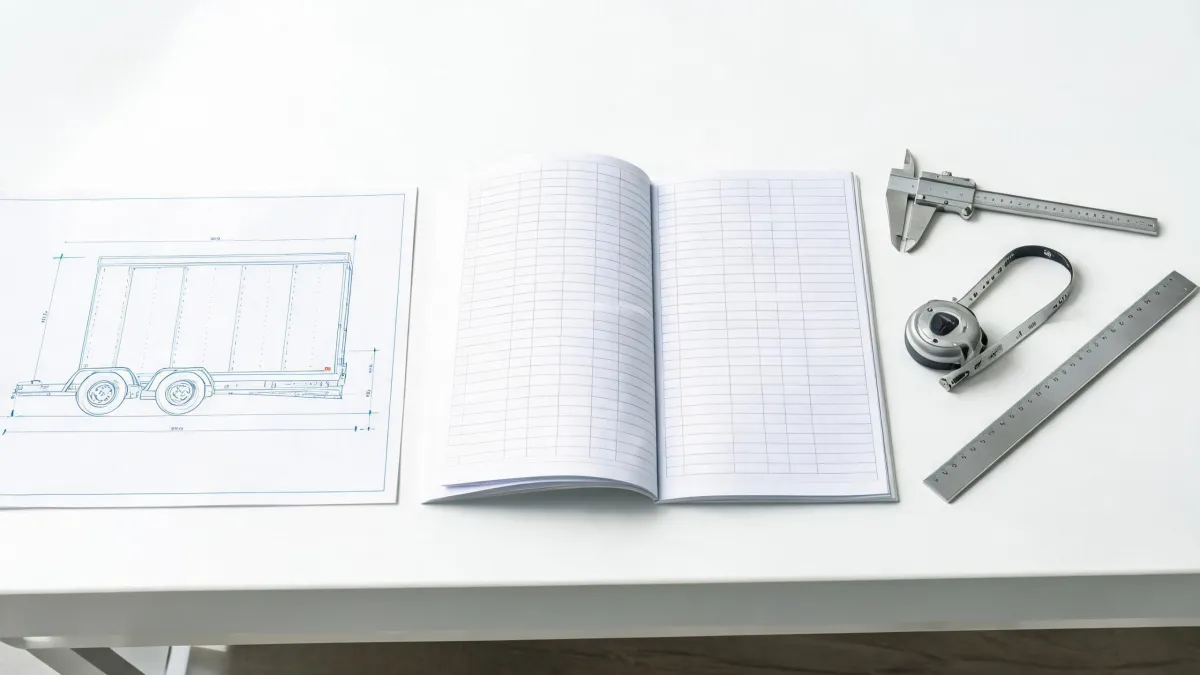
Picture two buyers picking up the same size trailer on the same afternoon. The first ordered off the number in the size column, backed his crate up to the rear opening, and stopped: the crate sat inside the advertised length and width and still would not pass the door frame. The second had pulled the interior figures and the door opening before he signed, and his load went in on the first shove. Same trailer, same money, different homework. That gap is what this check is for.
Usable interior space in an aluminum cargo trailer is set by the interior liner dimensions and the rear-door clear opening, not by the advertised box size. The box figure describes the outside story, and it is the number the size chart leads with. The worked example throughout is an ALCOM enclosed aluminum cargo trailer; treat these figures as that build's figures and confirm them on your own order sheet.
Two Buyers, One Trailer Load
Suppose two buyers order the same 7.5 ft x 16 ft build and both measure their crate first. The difference is the question they answer. Buyer A asks whether the crate fits inside 7.5 ft by 16 ft. Buyer B asks what the finished inside measures and what the rear opening clears. Neither is careless — they are answering different questions, and only one of those questions is about the space the crate has to travel through. A crate can clear the floor plan and still foul the frame on the way in, which is why a fit checked at the chart and a fit checked at the doorway can disagree on the same trailer. The buyer who ends up trading back is usually the one who never measured the second gate.
Box Size Is Not Usable Space
Trailer sizes are noted as box size, which covers length, width and height together. Interior dimensions run slightly smaller — roughly two inches in each dimension on the builds described here. The published example on a 7.5 ft x 16 ft unit reads 90 inches by 16 ft by 78 inches for the box, against 87 inches by 15 ft 10 in by 76 inches for the interior. One trailer, measured twice.
That gap is structural, not a rounding error. The box figure is taken outside the walls; the interior figure is taken to the finished inside surface, so the wall build has to live somewhere in between. Which means a trailer sold as 7.5 ft wide hands you 87 inches across, and a 16 ft box hands you 15 ft 10 in of floor. On a load that is tight by an inch, that difference is the whole purchase.
Write Down Three Numbers Before You Compare Sizes
Before you open a size chart, measure the load, not the trailer. Three figures: length, width, and height at the tallest point, with anything that protrudes included. Then add the clearance the item needs to tilt or slide into place, because a crate that goes in flat on a pallet jack needs less room than one that has to be tipped up and walked through the doorway.
Convert those figures into interior terms before you compare anything. The width menu runs 4 ft, 5 ft, 6 ft, 7 ft, 7.5 ft and 8.5 ft, and every one of those names a box dimension, so the subtraction comes first and the chart comes second. The spread alone is a warning: between 4 ft and 8.5 ft, the column you read matters as much as the load you measured. You know the conversion is done when the three numbers on your page are interior figures rather than the ones printed in the size column, and when the clearance you added is written next to them instead of carried in your head.
The Rear Door Sets a Second Limit
Every unit has a rear door for loading, unloading and access, and many come standard with double barn doors; the most compact 4 ft wide haulers take a single barn door. Ramps and tools can be stowed on the inside of those doors, which is handy right up to the moment you plan a load around the interior figure.
That stowage sits inside the space you just measured, and the door framing sits inside the rear wall, so the clear opening — the gap the load actually passes through — is the tighter of the two gates. A crate can clear the interior height and still foul the header, because entry comes down to the framed opening, not the wall-to-wall number. Interior dimensions tell you what fits once the load is in. The aperture tells you whether it gets in at all, and the two are separate measurements you have to ask for separately.
Does Side Access Change Usable Space?
A side access door changes how you reach the load, not how much room the box gives you. Many builds come standard with one, larger doors and multiple doors can be ordered on bigger trailers, and a concession door is offered on the larger units. None of that adds floor area.
What it adds is a second way in, which matters when the load fills the floor from the rear door forward and the item you need sits at the nose. Side access to a loaded trailer is treated as the priority upgrade in the published material, and the reason is practical rather than dimensional: reaching over a packed floor is slow and hard on your back. The same material describes the most compact 4 ft wide hauler with a single rear barn door without spelling out the full ordering sequence, so make it a counter question — which doors ship on the exact build, and what clear opening does each one leave?
Dry-Run the Load Before You Commit
Imagine the load on a shop floor: tape the interior footprint using the published interior figures, stand the tallest item inside the outline, then lay a second outline for the rear aperture you expect on the build and walk the widest face of the load through it at the angle you would really load it, not square-on and lifted by two people who are not standing there.
If it fouls the tape, it fouls the frame. Measure twice, load once — that is the whole trick, and a pass with a tape on a concrete floor beats a fight at the ramp with the truck already backed in. The rehearsal is finished when every item clears both outlines without tilting, and when the tilt you had to allow for is already inside your clearance figure instead of being discovered in the driveway.
Check the Spec Sheet for Your Model and Year
Detailed interior dimensions are published for every size offered, which means the interior figure is a number you can quote rather than one you work out at the counter. Ask for the current spec sheet for the exact size and model year you are ordering; those published figures belong to that build, so they are the ones worth pointing at when the order is written.
Put the interior length, width and height plus the rear clear opening into the order paperwork, not just into your phone notes. If the clear opening cannot be produced for the size you want, you have reached the edge of what the chart can tell you, and that is worth knowing before a deposit rather than after one.
What You Gain and What You Give Up
The habit costs an extra pass with a tape and one call about the rear opening, and it can push you toward a wider or taller box than the cheapest size that looked adequate on paper. That is the trade: more money, more trailer, and less margin on weight and price than the brochure implied. What comes back is a load that goes in on the first attempt and a spec you can point to in the published interior figures when someone asks why you ordered the size you did.

Jane Smith
I’m Jane Smith, a senior content writer with over 15 years of experience in the packaging and printing industry. I specialize in writing about the latest trends, technologies, and best practices in packaging design, sustainability, and printing techniques. My goal is to help businesses understand complex printing processes and design solutions that enhance both product packaging and brand visibility.